Choosing the Right Hostinger Plan
Choosing a web hosting plan can feel more complicated than it needs to be. Hostinger offers several options, and when you're building your first website, it isn't always obvious whether you need the cheapest plan, a more powerful option, or something in between.
The good news is that most beginners don't need expensive hosting to get started.
In this guide, we'll break down Hostinger's main hosting plans in plain English, explain the important differences, and help you decide which option makes the most sense for your website and budget.
For a simple first website, Hostinger Premium provides the essentials most beginners need. If you're building a more serious online business, expect to run several websites, or want daily backups and more resources, Unlimited gives you considerably more room to grow. Cloud Startup is aimed more at demanding or higher-traffic projects.
Hostinger Pricing at a Glance
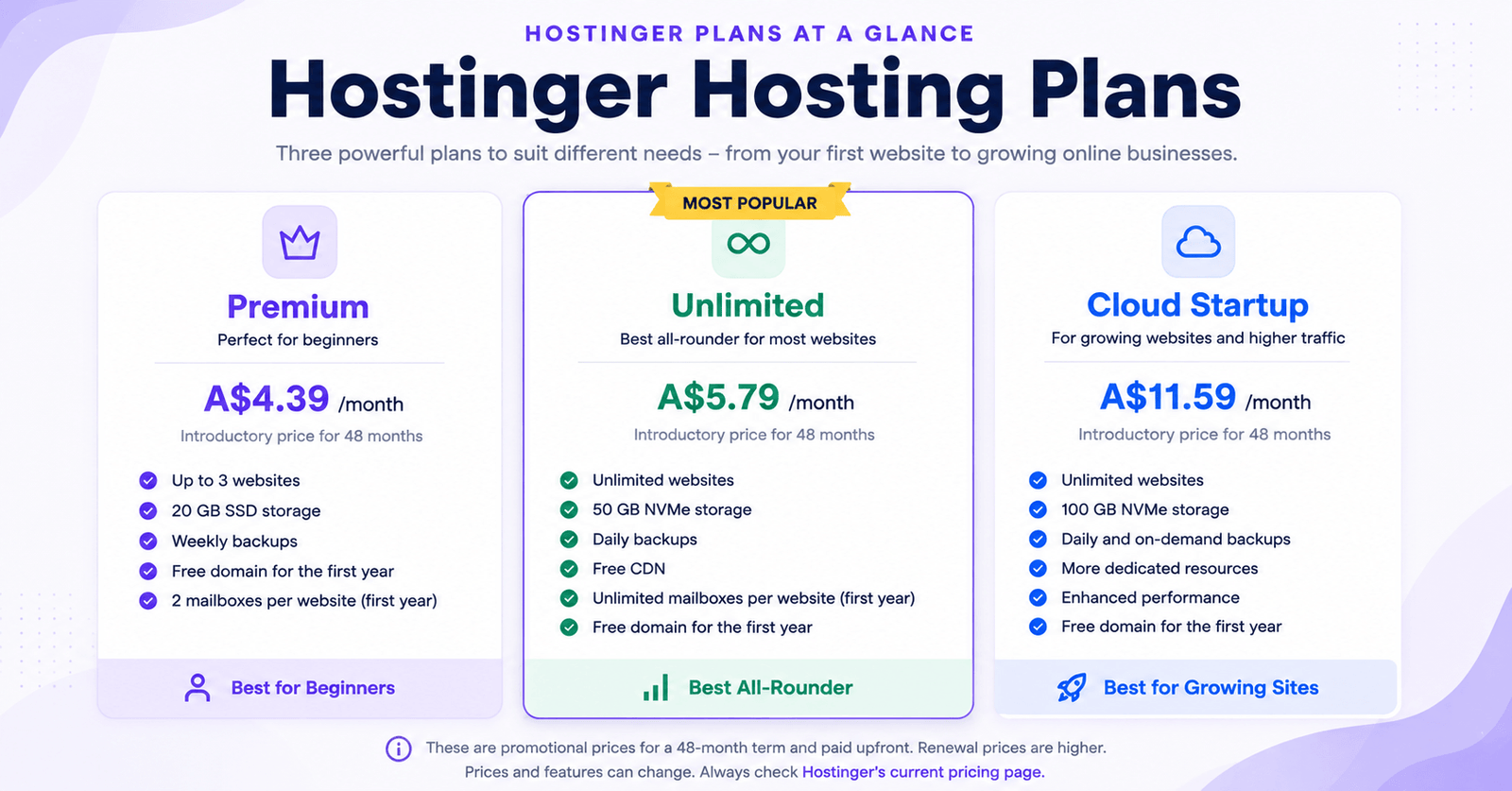
Hostinger currently offers three main options across its standard web hosting range: Premium, Unlimited and Cloud Startup.
At the time of writing, Hostinger's Australian pricing page lists the following promotional prices when purchasing a 48-month term:
Up to 3 websites, 20 GB SSD storage, weekly backups, a free domain for the first year and 2 mailboxes per website free for the first year.
Unlimited websites, 50 GB NVMe storage, daily backups, CDN, integrated ecommerce features and unlimited mailboxes per website free for the first year.
Unlimited websites, 100 GB NVMe storage, daily and on-demand backups, more dedicated resources and additional performance for larger or higher-traffic projects.
New to web hosting? If you’re not sure what hosting actually does, start with our beginner guide to choosing reliable web hosting.
Which Hostinger Plan Is Best for Beginners?
For most people building their first website, the choice will usually come down to Premium or Unlimited.
Premium is the cheaper option and gives you enough to launch a simple website, blog or small online project without paying for features you may not need yet.
Unlimited costs a little more, but gives you substantially more flexibility if you plan to build several websites, grow an online business, use ecommerce features or simply want more room to expand without upgrading as quickly.
If you are building your first simple website and want to keep your initial cost as low as possible, Premium should be enough to get started. If your goal is to build a serious online business, we think Unlimited is the stronger long-term choice for many beginners because it gives you more websites, more storage, daily backups and additional features from the beginning.
Is Hostinger Unlimited Worth the Upgrade?
Looking only at the monthly promotional price, the difference between Premium and Unlimited is relatively small.
But the important question isn't simply which plan costs less. It's whether the additional features in Unlimited are useful for the type of website you're planning to build.
You're creating your first simple website, blog or portfolio and want an inexpensive way to get online.
You're building an online business, expect to create multiple websites, want daily backups, need more storage or prefer having extra room to grow.
What About Cloud Startup?
Cloud Startup offers considerably more resources and performance, but most beginners won't need that level of hosting when launching their first website.
It becomes more interesting once you're running a larger website, managing higher traffic, operating several important sites or need additional performance and resources.
For that reason, we wouldn't normally suggest that a brand-new website owner jump straight to Cloud Startup unless they already know their project requires the extra capacity.

Hostinger Introductory Prices vs Renewal Prices
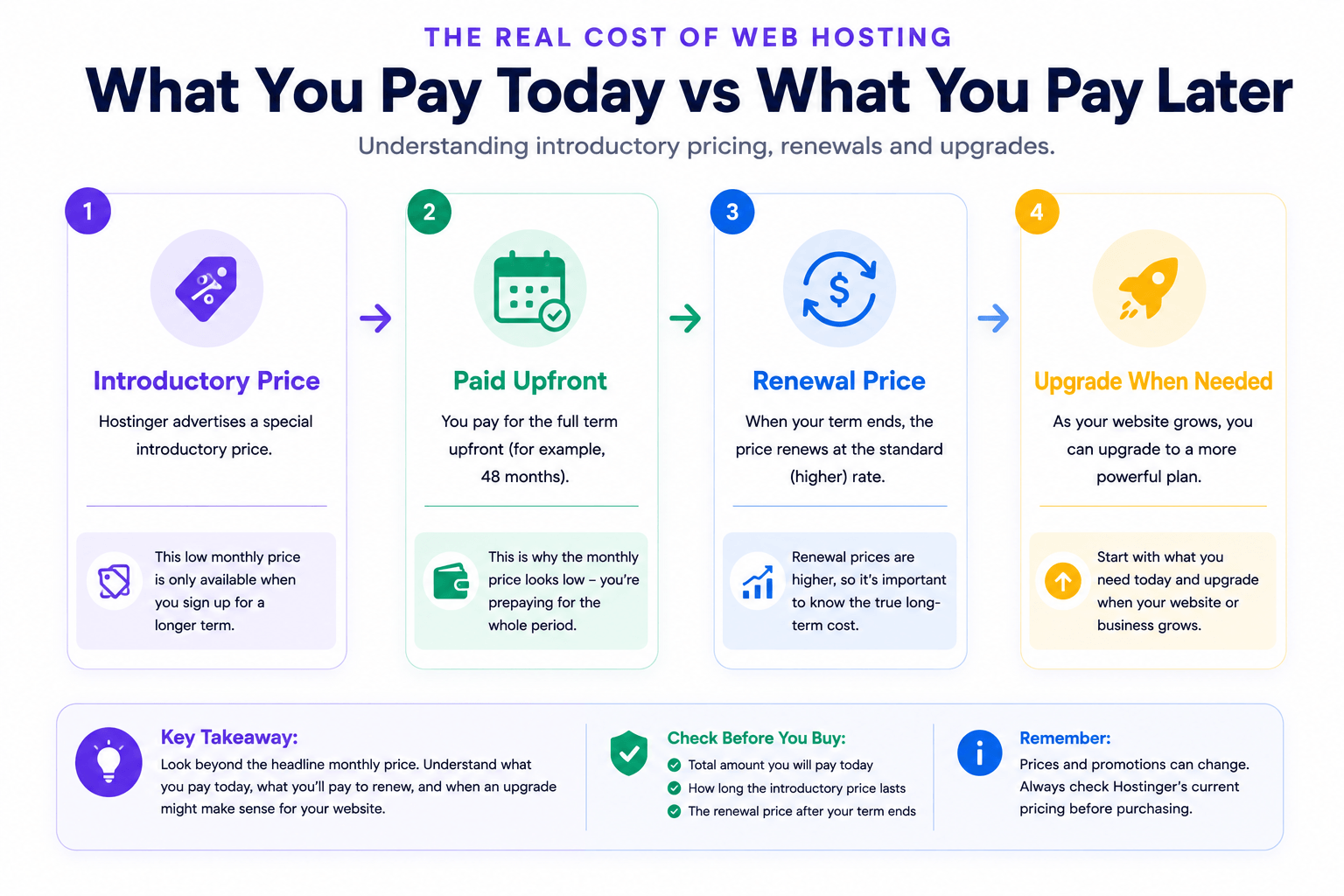
One of the most important things to understand about web hosting prices is that the advertised monthly rate is usually an introductory promotional price.
With Hostinger, the lowest advertised monthly price is normally based on purchasing a longer hosting term and paying for that period upfront.
That means a plan advertised at a low monthly rate does not usually mean you will be charged that amount every month. Instead, the total cost of the hosting term is paid when you sign up.
Always check three things before choosing a hosting plan:
✓ The total amount you will pay today
✓ How long the introductory price lasts
✓ The renewal price after your initial term ends
Renewal prices are generally higher than the introductory rate, so it is worth looking beyond the headline price when comparing plans.
A lower introductory price can still represent good value, but you should know what the plan is likely to cost when it comes time to renew.
Growing Your WebsiteCan You Upgrade Your Hostinger Plan Later?
Yes. One of the advantages of starting with a lower-cost hosting plan is that you don't have to predict exactly how large your website will become.
If your website grows, attracts more visitors or starts requiring additional resources, you can move to a more powerful Hostinger plan later.
This means beginners don't necessarily need to pay for Cloud hosting or additional resources before they actually need them.
Start with the hosting plan that comfortably supports what you're building today. If your traffic, websites or business grow, upgrade when the additional resources become useful rather than paying for them from day one.
What Hostinger Extras Should You Consider?
Storage and the number of websites are important, but they aren't the only things worth comparing when choosing a hosting plan.
For a beginner or small online business, these features can make a meaningful difference:
Regular backups give you another layer of protection if something goes wrong with your website. Higher Hostinger plans typically include more frequent backup options.
Eligible longer-term plans may include a free domain for the first year, which can reduce the initial cost of launching your website.
Having an email address using your own domain can make a new online business look more professional than relying entirely on a free personal email address.
As your website grows, additional performance tools can help pages load efficiently for visitors in different locations.
If you're planning to sell products or services online, check whether the plan you choose includes the ecommerce tools and resources your website will need.
Which Hostinger Plan Should You Choose?
The best Hostinger plan depends less on which option has the longest feature list and more on what you're actually planning to build.
For most beginners, the decision comes down to whether you want the lowest possible starting cost or a little more flexibility for future growth.
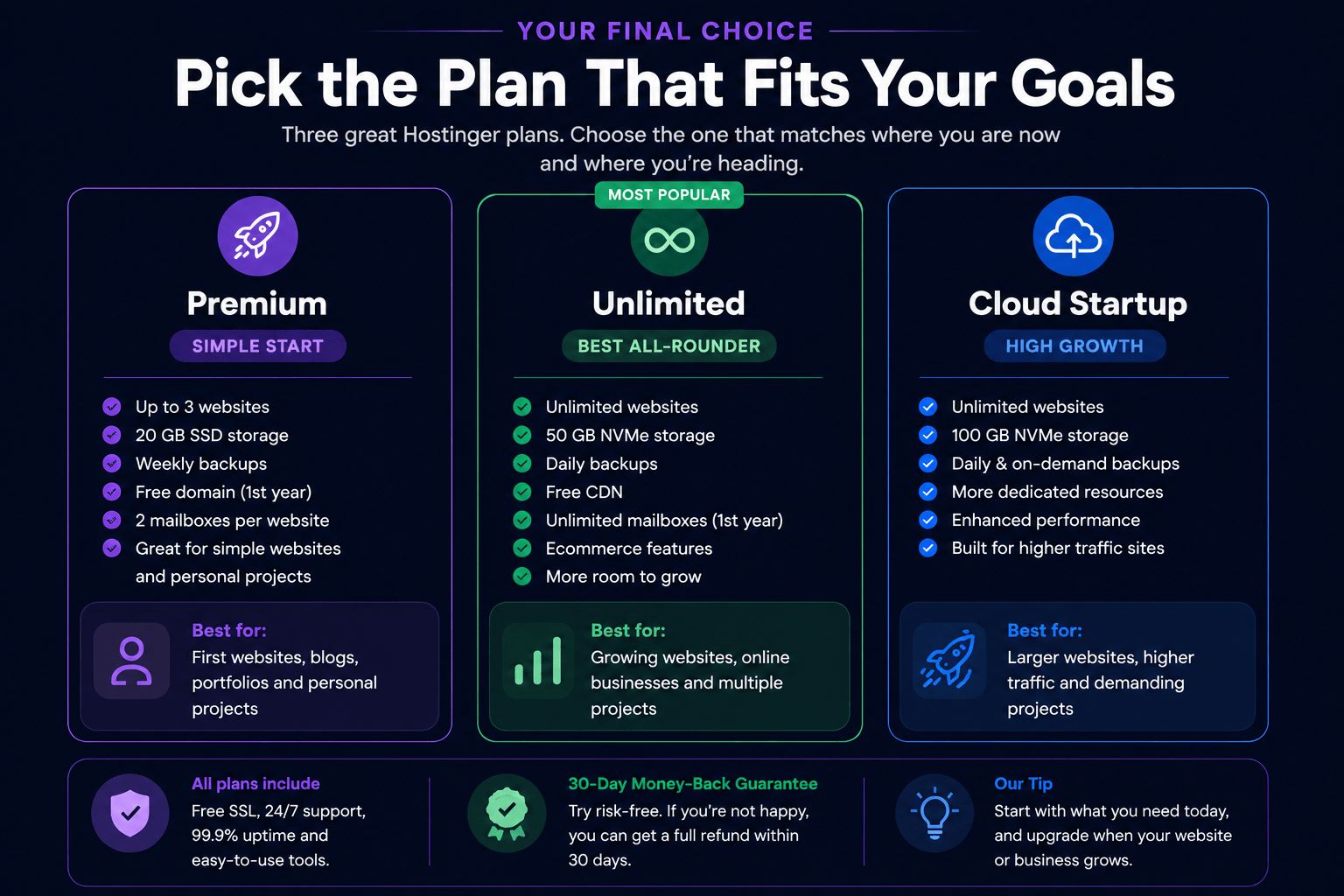
Building your first simple website, personal blog, portfolio or small project and want to keep your initial hosting cost as low as possible.
Building an online business, planning multiple websites, expecting to grow, or want daily backups, more storage and additional features from the start.
Running a larger or more demanding website, expect higher traffic, manage several important sites, or need more performance and dedicated resources.
Hostinger Unlimited is likely to be the best all-round choice for many beginners who are serious about building an online business. Premium is perfectly suitable for a simple first website, but Unlimited gives you more room to grow without immediately moving into the higher cost of Cloud hosting.
Is Hostinger Right for You?
Pricing is only one part of choosing a web host. Reliability, ease of use, website management tools, support and overall value matter too.
If you're still deciding whether Hostinger itself is the right hosting provider for your website, we've put together a full beginner-friendly review covering the platform in more detail.
Read our full Hostinger Review to see what we like, where Hostinger has limitations, and whether we think it is a good choice for beginners building an online business.
Final Thoughts
You don't need the most expensive hosting plan to build a successful website.
For a straightforward first site, Premium can provide everything you need to get started. If you're building an online business and want more flexibility from day one, Unlimited offers a stronger balance of price, features and room to grow.
Cloud Startup makes more sense when your website has reached the point where additional performance and resources are genuinely useful.
Whichever plan you choose, check Hostinger's current price, total upfront payment and renewal cost before completing your purchase.
Hostinger Pricing FAQs
Still comparing plans? These are some of the most common questions beginners have before choosing Hostinger.
Premium is a good starting point for a simple first website, blog or portfolio. If you're building an online business or expect to grow, Unlimited may offer better long-term flexibility.
For many beginners, yes. Unlimited adds more storage, daily backups, more websites and extra features that can be useful if you're building a serious online business rather than a small personal site.
Most beginners won't need Cloud Startup when launching their first website. It is better suited to larger, higher-traffic or more demanding websites that need additional resources and performance.
Hostinger displays an equivalent monthly promotional price, but the lowest rates are generally based on purchasing a longer hosting term and paying the total amount upfront.
Renewal prices are typically higher than the introductory promotional rate. Always check the current renewal price and total cost before purchasing a plan.
Yes. You can start with a lower-cost plan and move to a more powerful hosting option later if your website grows or needs additional resources.
Eligible plans may include a free domain for the first year when purchased for a qualifying term. Check Hostinger's current plan details before signing up.
For many small online businesses, Unlimited offers a strong balance of price, features and room to grow. Larger or higher-traffic businesses may eventually benefit from Cloud Startup.
Read our full Hostinger Review for a broader look at ease of use, performance, support, pros, cons and who we think Hostinger is best suited for.